
Redirecting Water Before Foundation Damage Starts
French Drain Installation in Sayreville for properties with standing water, basement moisture, or recurring drainage problems
Clean Drain LLC installs French drains throughout Sayreville and surrounding Central Jersey communities for residential and commercial properties dealing with water accumulation that threatens foundations, basements, landscaping, and usable outdoor space. When water pools along your foundation after heavy rain, saturates low-lying areas of your yard, or creates persistent muddy zones near driveways and patios, a properly designed French drain system redirects that excess water away from vulnerable areas before it causes erosion, structural moisture issues, or landscape damage. The system works by capturing groundwater and surface runoff through a perforated pipe surrounded by gravel, channeling it toward an appropriate discharge point where it no longer threatens your property.
French drain installation begins with evaluating your property to identify where water originates, which direction it naturally flows, and where discharge can occur without creating problems for neighboring properties or municipal systems. The approach varies depending on soil composition, grade changes, proximity to structures, and whether the primary concern involves surface water pooling or subsurface groundwater movement.
Schedule a property evaluation to determine the most effective drainage route and discharge solution for your specific water accumulation pattern.
What Proper French Drain Installation Requires
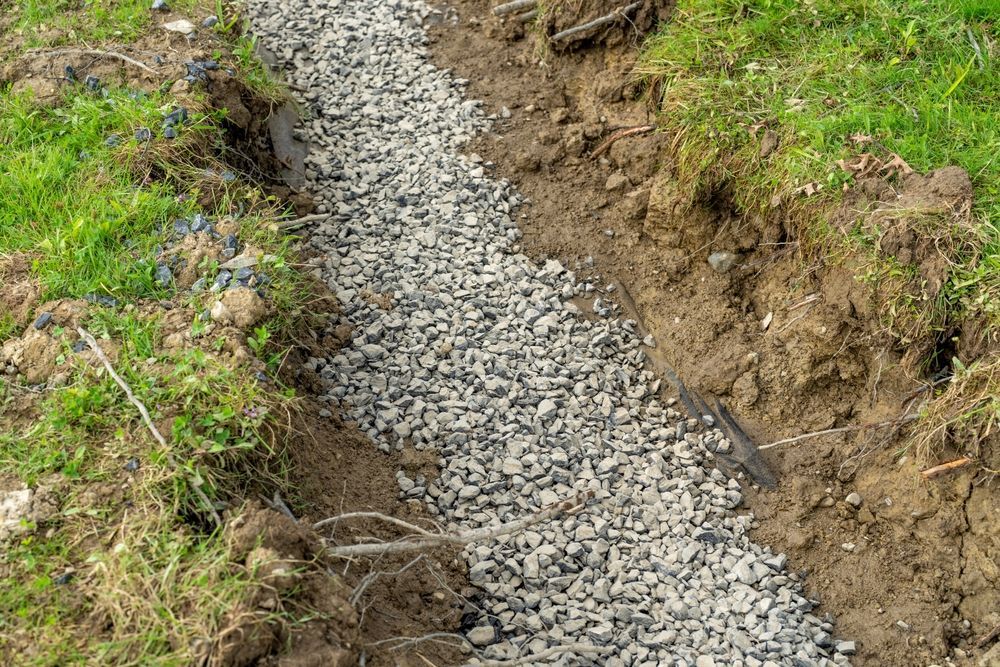
Installation involves excavating a trench along the planned drainage route, typically between twelve and twenty-four inches deep depending on the water source and terrain, then creating a slope that allows gravity to move water consistently toward the discharge point. Perforated drainage pipe is placed within the trench, surrounded by washed gravel that filters sediment while allowing water to enter the pipe freely, and the trench is backfilled with additional gravel and soil to restore the surface.
After installation, you will notice that areas previously saturated after rainfall now drain within hours rather than remaining soggy for days, foundation perimeters stay dry instead of accumulating standing water, and landscaping in low-lying zones shows healthier growth patterns without root rot caused by prolonged moisture exposure. Driveways and patios adjacent to drainage problem areas no longer develop undermining or settling caused by soil erosion from repeated water flow.
The system requires a discharge point that can handle the volume of redirected water, whether that involves daylight drainage to a lower grade area, connection to an existing stormwater system, or discharge into a dry well. Slope consistency throughout the drainage route determines whether water moves efficiently or stalls within the pipe, and gravel quality affects how quickly the system clogs with fine sediment over time.
What Property Owners Ask About Drainage Solutions
Homeowners and business operators in Sayreville often have questions about how French drains function, what installation involves, and whether this approach fits their specific drainage challenge.
What signs indicate that a property needs a French drain?
Standing water that remains for more than twenty-four hours after rain, basement moisture or seepage along foundation walls, soil erosion channels that deepen after each storm, soggy zones where grass dies or landscaping struggles, and repeated flooding in low-lying yard areas all suggest that subsurface or surface water needs redirection through a drainage system.
How long does French drain installation typically take?
Most residential installations require one to three days depending on trench length, soil conditions, and whether excavation encounters obstacles like tree roots or buried utilities, while commercial projects involving longer drainage routes or multiple discharge points may extend to a full week.
Where should the drainage system discharge water?
Discharge must direct water to an area where it will not create new problems, such as a lower grade section of the property, an existing municipal stormwater inlet if permitted, a dry well that allows gradual absorption, or a natural drainage swale that carries runoff away from structures.
What factors affect the cost of a French drain system?
Trench length, excavation depth, soil type and difficulty of digging, proximity to structures requiring careful hand excavation, discharge point requirements, and whether the project involves coordination with landscaping restoration or hardscape adjustments all influence the total installation cost.
Does a French drain require ongoing maintenance?
Systems installed with proper gravel filtration and adequate slope typically function for years without intervention, though discharge points should be checked periodically to confirm they remain unobstructed, and surface grates or catch basins connected to the system may need debris removal after heavy storms to maintain full flow capacity.
Clean Drain LLC evaluates drainage problems throughout Sayreville and Central Jersey to recommend solutions based on actual site conditions rather than one-size-fits-all installations. Request a free estimate to review your property's water flow patterns and determine whether a French drain provides the most effective approach for protecting your foundation, yard, and structures from recurring water accumulation.