Pipes You Can't See Without Equipment
Video Camera Inspection in Sayreville for sewer and drain line diagnosis before any repair work is recommended or priced
Route 9 corridor homes built before 1980 frequently run clay or cast iron sewer lines with joint separation that won't show up during a visual inspection at the cleanout. Clean Drain LLC runs video camera equipment through your sewer and drain lines and reviews the footage with you on-site so you see exactly what is wrong, where the problem is located, and why a specific repair is warranted before a single dollar is committed to excavation or replacement. Sayreville Borough and Washington Road corridor homes are prime candidates for hidden joint separation because soil settling and freeze-thaw ground movement stress rigid pipe connections over decades, and the damage accumulates invisibly until a backup forces the issue.
The camera inspection happens before any repair recommendation because joint separation in one section doesn't justify replacing the entire line, and a root intrusion at a single joint can often be cleared and sealed without excavation. You watch the footage in real time, see the pipe interior condition, and understand what the camera reveals about whether a spot repair is sufficient or whether multiple failure points require a longer replacement section.
Request a video camera inspection to confirm what is happening inside your sewer or drain line before approving any repair work.
Why Camera Diagnosis Prevents Unnecessary Work
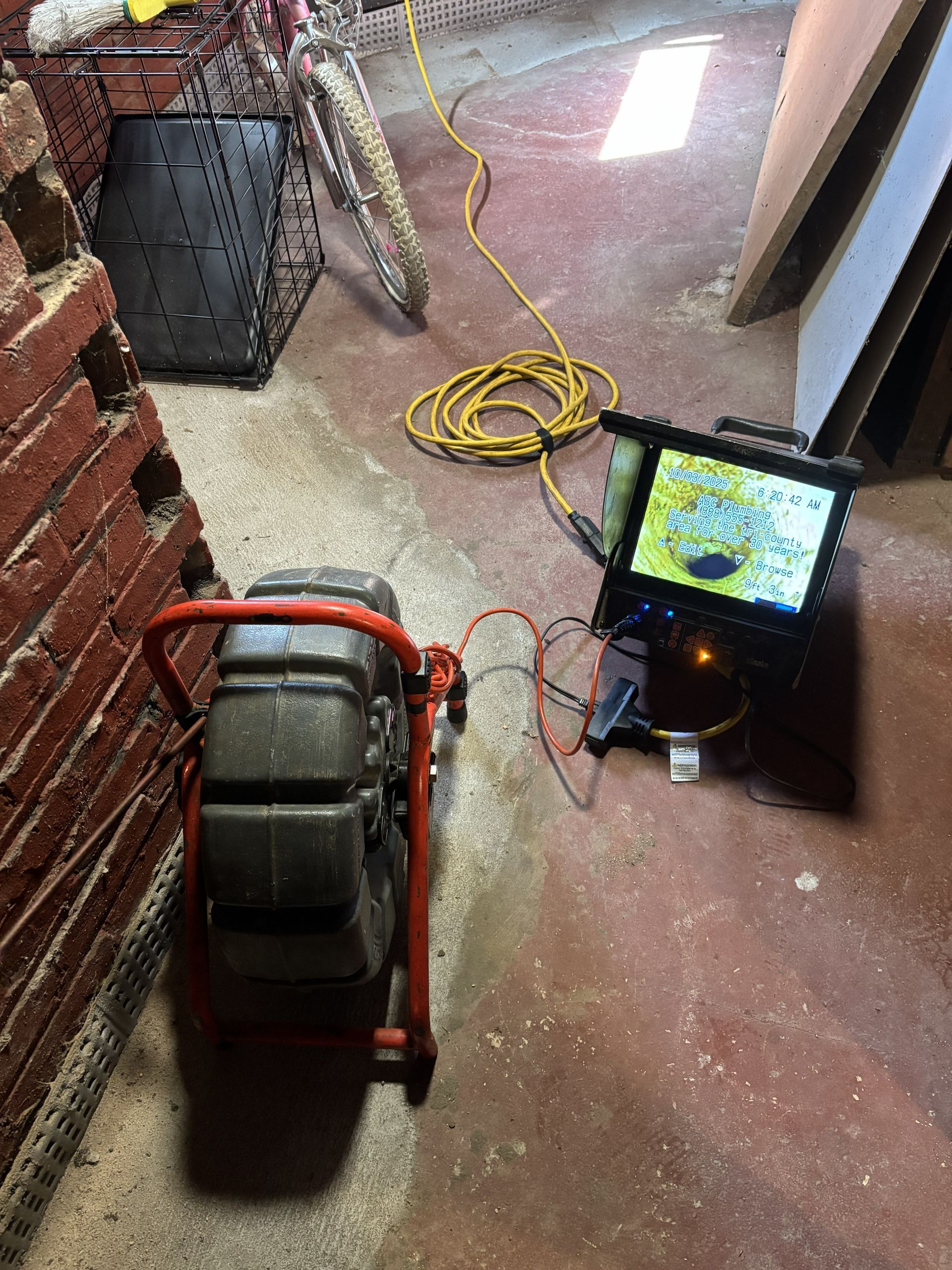
Camera footage shows pipe material, interior condition, joint alignment, root intrusion points, and whether the line maintains proper slope for drainage. That information determines whether a mechanical clearing resolves the problem, whether a trenchless liner stabilizes a compromised section, or whether excavation and replacement are required because the pipe has collapsed or separated beyond repair.
After the inspection is complete, you receive a plain-language explanation of what the footage shows and what work is necessary to restore function—no upselling, no worst-case assumptions, no excavation recommended until the camera confirms the scope. The inspection is used on both residential and commercial lines and is part of every sewer repair diagnostic workflow at Clean Drain LLC because digging blind wastes time and money when the camera can pinpoint the problem in 20 minutes.
The camera runs on a flexible cable that navigates bends and offsets in the line, and footage is recorded with distance markers so you know exactly how many feet from the cleanout the problem is located. If the line is blocked and the camera can't pass, the blockage is cleared first, then the camera runs again to inspect the full pipe interior and confirm no additional damage is hidden downstream.
Common Questions About Camera Inspections
Camera inspection is the only way to see inside a buried sewer line without excavation, and knowing what the process involves helps property owners make informed decisions about repair scope and cost.
What does the camera show during a sewer line inspection?
The camera displays pipe material, interior diameter, joint condition, root intrusion points, scale buildup, cracks, offsets, and whether the line maintains proper slope—all visible in real time on a monitor so you see the same footage the technician is evaluating.
How long does a typical camera inspection take?
Most residential sewer line inspections from cleanout to street connection are completed within 30 minutes if the line is clear enough for the camera to pass; blocked lines require clearing first, then the camera runs afterward to inspect the full interior and confirm no hidden damage downstream.
Why do Sayreville homes need camera inspections more often than newer construction?
Pre-1980 homes along Route 9 and the Washington Road corridor were built with clay or cast iron sewer lines that develop joint separation as soil settles and freeze-thaw cycles stress rigid connections, and those failures happen invisibly until the camera shows the gap or offset that causes recurring backups.
What happens if the camera finds multiple problems in different sections?
The footage is reviewed with you on-site, and each problem area is explained in terms of severity and repair priority—some issues require immediate attention to prevent backups, while others can be monitored and addressed during future work if budget or timing is a concern.
Is the camera inspection included in the repair cost or billed separately?
The inspection is a standalone diagnostic service with a fair price set before the camera enters the line, and the footage belongs to you regardless of whether you proceed with recommended repairs—no pressure, no bundled pricing, no hidden fees if you choose to get a second opinion.
Guessing about what is wrong inside a buried sewer line leads to unnecessary excavation, inflated repair costs, and work that doesn't address the actual problem. Clean Drain LLC runs the camera first, reviews the footage with you on-site, and recommends only the work the evidence supports—camera before the snake, diagnosis before demolition, transparency before the invoice.